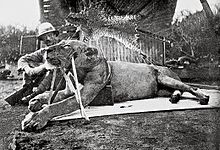
The Real Tsavo Man Eaters
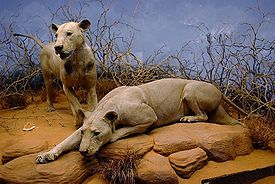
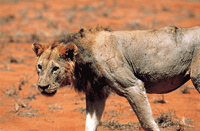
Tsavo lions are a distinct variety of lion living around the Tsavo River
in the Tsavo National Park in Kenya. Tsavo males are notable for their
lack of mane, smooth pelt, their size, and that they actively
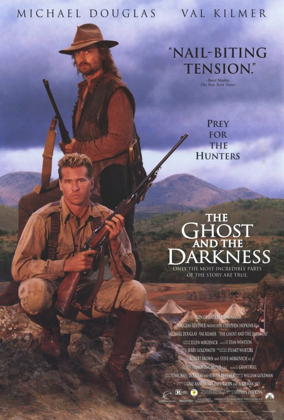
participate in hunting. Both The Ghost and the Darkness movie, and Patterson's autobiography cite the camps death toll as high as 135. However, Colonel Patterson's original account of the event claims the death count was only 28 (Gnoske). The inflated figures helped him turn a good story into a profitable legend, one that the tourism industry in Kenya has thrived on.
"The distorted version, perpetuated by Hollywood and popular treatments,
falls more into the category of myth rather than fact. Promoting such
fiction can actually have a negative impact on serious conservation
efforts focused on preserving lions in the wild," Gnoske says.
Endangered prey:
There are many factors that should be considered when talking about the Tsavo man eaters. During 1891 and 1893, Rinderpest was introduced, an infectious viral disease of cattle and buffalo which struck the sub Saharan Africa. This disease killed off most of the cattle and buffalo, leaving the lions unable to eat their natural prey. Colonel Patterson's records show that Kenya was still feeling the impacts from Rinderpest. There were also changing environmental factors that affected herbivore populations.
Humans deteriorated Tsavo's ecosystems with their quest for ivory. Mass killings eliminated most, if not all elephants from Tsavo and across much of Kenya. With no elephants to regulate the growth of thick brush, the savannah soon became overwhelmed with tangled, thorny, ground cover. This environment that is excellent cover for lions but is not suited to all grazing animals. Humans soon became the easiest remaining prey, lions could stalk them from the bush, ambush them, drag them back in, and escape with ease.